
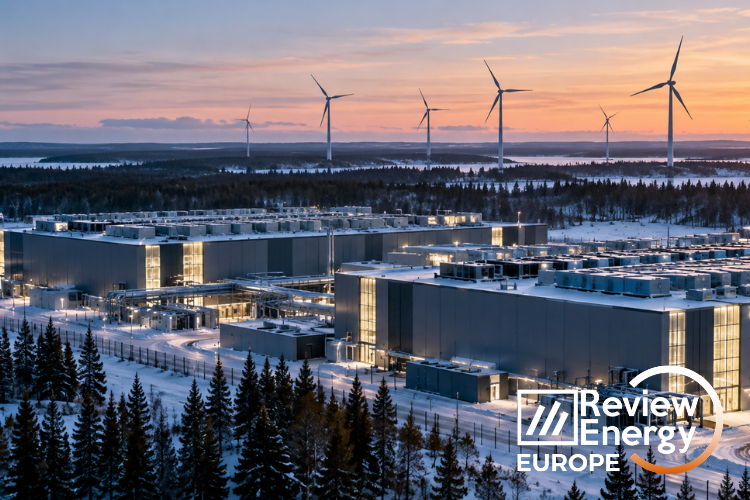


Data centers gain a bigger role in financing Finland’s power system
Data centers have become the main financiers of new power capacity in Finland, as rising demand for continuous electricity supply reshapes the country’s power contracting landscape.
According to a new analysis by Rystad Energy, procurement is shifting from agreements focused mainly on renewable energy volumes toward structures capable of providing a supply profile closer to baseload generation.
This change is reflected in the 507 MW agreement signed by Google with Fortum for the Loviisa nuclear power plant, Finland’s first nuclear PPA. Rystad sees the deal as an indication of a broader trend in which large digital consumers will increasingly combine different technologies to secure more stable electricity supply.
Finland could reach 5 GW of data center capacity by 2035
Rystad expects Finland to become the fifth-largest data center market in Europe by 2035, with installed capacity rising from 0.8 GW in 2026 to 5 GW.
By 2030, data centers could account for around 15% of Finland’s electricity consumption, becoming the country’s main source of new power demand.
Rystad points to several factors supporting this growth, including low-cost onshore wind, a strong power grid, low carbon intensity in the electricity system and Finland’s cold climate, which reduces cooling requirements.
Data centers overtake industry as long-term power buyers
Data centers have already surpassed manufacturing and industrial companies as the largest buyers of electricity through long-term contracts in Finland, with the gap widening rapidly.
Google’s 507 MW PPA with Loviisa is the largest individual agreement signed in the country so far, exceeding the 367 MW contract between Amazon and OX2 for the Rajamäenkylä wind project.
The nuclear agreement also runs for 22 years, more than twice as long as several major wind and solar PPAs signed in Finland during 2025 and 2026.
According to Rystad, the longer duration reflects the growing priority among data center operators to secure stable and predictable electricity volumes over extended periods.
Wind will keep expanding, but batteries will be increasingly important
Rystad expects onshore wind to continue leading Finland’s renewable capacity growth through 2035.
However, rising wind and solar generation has also contributed to a higher number of negative electricity price hours, while battery storage capacity continues to expand.
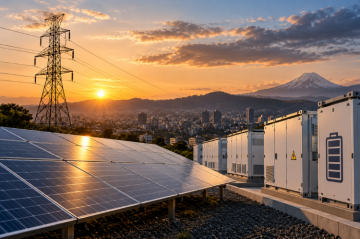
This could support the emergence of hybrid PPAs combining renewable generation with battery energy storage systems, providing a firmer supply profile better suited to the continuous operating needs of data centers.
Rystad expects the next generation of power supply contracts in Finland to follow this approach, combining wind, solar and batteries to deliver a profile closer to baseload supply.
Grid access could become a key bottleneck
The expected growth will also create new challenges for electricity infrastructure.
Finland has proposed replacing its current first-come, first-served grid connection system with a prioritization-based approach.
According to Rystad, the new framework could affect both data center developers and battery projects by favoring new local and firm generation and rewarding developers able to pair large loads with dispatchable capacity outside congested areas in southern Finland.
The analysis points to a broader transformation of Finland’s power market, in which data centers are not only increasing electricity demand but also influencing which technologies receive financing, how PPAs are structured and what type of capacity the system requires.
With digital demand growing rapidly, the combination of renewables, storage, firm generation and grid access could become one of the main factors shaping Finland’s power sector expansion over the next decade.

Comentarios
Sé el primero en comentar...