



El regreso de Energyear Brasil a Sao Paulo y las reformas energéticas de Trump marcan el resumen semanal
1. Energyear Brasil 2025: La cita clave para la transición energética regresa a Sao Paulo
Energyear Brasil regresa con su 4ta edición los días 5 y 6 de febrero de 2025, consolidándose como uno de los eventos más influyentes para la industria de las energías renovables en América Latina y Europa. El prestigioso Hotel Sheraton WTC en São Paulo será el escenario de este congreso híbrido, que promete ser el epicentro de la innovación, el networking y la transición energética en Brasil.
Con una asistencia proyectada de más de 800 participantes, una agenda enriquecida con 90 ponentes destacados, el respaldo de 50 partners estratégicos y la organización de 15 paneles temáticos, diseñados para abordar los temas más relevantes y actuales del sector de las energías renovables. Energyear Brasil 2025, se posiciona como el espacio ideal para debatir sobre los retos y oportunidades de la transición energética en un mercado de rápido crecimiento como el brasileño.
2. Clean energy industry warns of economic consequences from Trump’s energy policy shift
Donald Trump was sworn in as the 47th President of the United States on January 20, 2025, marking a dramatic return to the White House and the beginning of his second term. The inauguration ceremony, moved indoors due to severe weather, was attended by global leaders, prominent personalities, and key members of Congress. In his first hours as president, Trump wasted no time signing a series of executive orders, including a declaration of a National Energy Emergency, signaling a decisive shift in U.S. energy priorities.
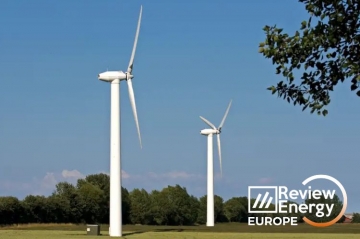
The National Energy Emergency, according to the president, is aimed at addressing rising energy costs and inflation by accelerating domestic fossil fuel production while scaling back renewable energy initiatives. Among these actions is a controversial executive order pausing offshore and onshore wind energy leasing and permitting, which has drawn swift reactions from the renewable energy sector.
3. Brasil aprueba ley que regula el Programa de Aceleración de la Transición Energética
El Gobierno de Brasil ha aprobado la ley que establece el Programa de Aceleración de la Transición Energética (Paten), una iniciativa estratégica que abarca áreras como el desarrollo de combustibles sostenibles, la valorización energética de residuos, la modernización de las infraestructuras de generación y transmisión de energía y la sustitución de fuentes contaminantes por alternativas renovables.
Según el Ministerio de Minas (MME) y Energía brasileño, se espera que Paten estimule la investigación y el desarrollo de tecnologías de captura y almacenamiento de carbono, hidrógeno verde, biogás y otras soluciones energéticas sostenibles.
El Programa, que contará con la adaptación de proyectos coordinados por el MME, es un impulso en promoción de tecnologías limpias y la ampliación de la matriz energética renovable.
4. Wind power ramps up in Ukraine with largest private investment since the war began
DTEK, Ukraine’s largest private energy company, has announced a €450 million investment to expand the Tyligulska Wind Power Plant (WPP) on the Black Sea coast. This marks the largest private-sector investment in Ukraine since Russia’s full-scale invasion in 2022 and sets a new milestone for the country’s energy sector.
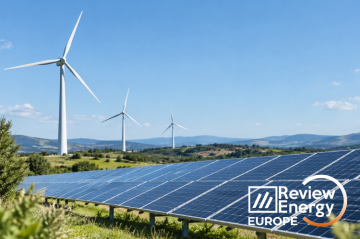
The windfarm’s capacity will quadruple from 114 MW to 500 MW, making it the largest windfarm built in Eastern Europe in a decade. The expansion will involve the installation of 64 Vestas EnVentus V162-6.0 MW turbines, financed through €370 million in loans backed by the Danish Export and Investment Fund (EIFO).
Once the expansion is completed in 2026, the Tyligulska windfarm will generate 1.7 TWh of electricity annually—enough to power 900,000 Ukrainian homes. This output is equivalent to the energy required to charge every smartphone in the European Union for an entire year.
5. Strategic alliance to boost the Southern Hydrogen Corridor between Europe and North Africa
Germany, Algeria, Italy, Austria, and Tunisia have signed a Joint Declaration of Intent (JDoI) in Rome for the development of the Southern Hydrogen Corridor.
The JDoI highlights the central role of the Southern Hydrogen Corridor in connecting renewable hydrogen production in North Africa with demand centers in the European Union.
According to information from the German government, through investment support, capacity building, and harmonizing government efforts, the signatories of the JDoI aim to build a robust hydrogen value chain that ensures the creation of local value, jobs, and sustainable energy development. The initiative is intended to become a cornerstone of the European energy security and decarbonization strategy.
In the future, the Southern Corridor will create a direct connection, composed of five subprojects, between North Africa and Italy, Austria, and Germany for gaseous hydrogen. It will have an approximate length of 3,500 to 4,000 kilometers.

Comentarios
Sé el primero en comentar...