
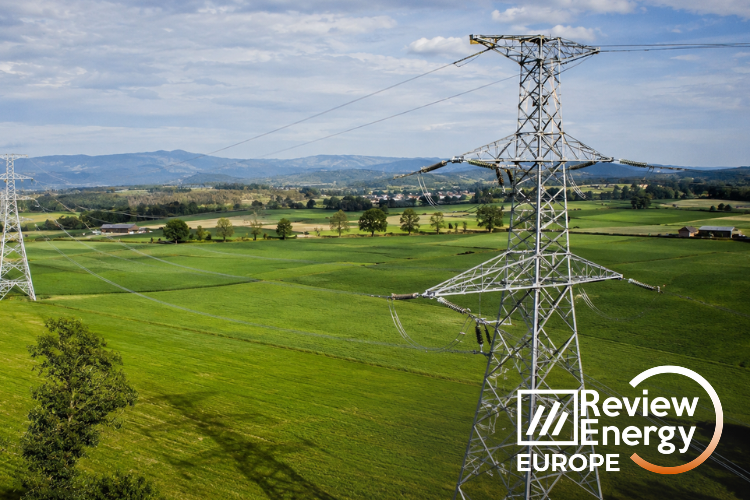


ENTSO-E forecasts demand for 34,000 km of HVDC cables and 2,820 transformers for Europe's energy transition by 2035
The European Network of Transmission System Operators for Electricity (ENTSO-E) estimates that European transmission system operators will need approximately 34,000 kilometres of high-voltage direct current (HVDC) cables and 2,820 power transformers between 2026 and 2035, as electricity networks respond to the energy transition, infrastructure replacement and the phase-out of certain SF?-based electrical equipment.
The figures are presented in The Transmission Grid Investment and Supply Chain Assessment Report 2026, published on 3 November 2026, which examines projected transmission infrastructure requirements and their implications for equipment manufacturing, supply chains and workforce availability.
The assessment draws on forecasts provided by 27 transmission system operators (TSOs) and covers seven categories of electricity transmission assets over the coming decade.
According to ENTSO-E, the demand for transmission equipment reflects several factors, including the integration of renewable generation, the development of electricity interconnections, the replacement of infrastructure installed during the 1980s and 1990s, and European restrictions on the use of sulphur hexafluoride (SF?) in electrical equipment.
Europe will require nearly 34,000 kilometres of HVDC cables
One of the report's main findings concerns the demand for high-voltage direct current cables, which are used for long-distance electricity transmission, submarine interconnections and the connection of offshore wind generation.
ENTSO-E identifies a requirement for approximately 33,990 kilometres of HVDC cables by 2035, comprising:
-
22,303 kilometres of underground HVDC cables.
-
11,687 kilometres of submarine HVDC cables.
The study indicates that Germany accounts for approximately 85% of the projected demand for underground HVDC cables, while submarine cable requirements are distributed across several European markets.
HVDC infrastructure supports electricity transmission over long distances and is used in projects ranging from offshore wind connections to interconnectors and transmission corridors. However, the report does not attribute the entire projected cable requirement to renewable energy developments.
ENTSO-E identifies manufacturing capacity as one of the main constraints on the implementation of transmission projects. According to the assessment, some European HVDC cable manufacturers already have production capacity committed through 2030.
Additional challenges include raw material availability, cable-laying vessels, port infrastructure and specialised installation personnel.
Demand includes 2,820 transformers and 119 HVDC converter stations
Regarding power transformers, participating operators forecast the addition of 2,820 units by 2035, compared with an installed base of 5,649 units recorded in 2025.
The report also identifies 119 additional bipolar HVDC converter stations, which enable the connection of direct current transmission systems to alternating current electricity networks.
ENTSO-E notes that converter station projects involve lengthy engineering, manufacturing and installation processes. In particular, transformers used in converter systems can have delivery lead times of four to five years.
These procurement requirements could affect the implementation of projects planned for the end of the decade if equipment orders are not placed sufficiently early.
The organisation also highlights the importance of coordinating procurement schedules and technical specifications to address potential constraints in manufacturing and delivery capacity.
More than 64,000 kilometres of conductors to reinforce electricity networks
The assessment forecasts the deployment of 64,107 kilometres of high-temperature low-sag (HTLS) conductors through 2035.
These conductors allow overhead transmission lines to carry higher electrical currents while limiting conductor sag, providing an option for increasing transmission capacity on existing infrastructure.
Unlike the construction of new transmission corridors, HTLS technology can be used to upgrade existing lines without replacing all transmission towers.
The report also identifies plans to expand the use of Dynamic Line Rating (DLR) systems, which adjust the operational capacity of electricity lines according to environmental and operating conditions.
According to ENTSO-E, German transmission system operators account for approximately 69% of projected HTLS conductor demand included in the assessment.
The figures reflect both electricity network expansion and the upgrading of existing assets to increase transmission capacity.
SF? phase-out will require changes in electrical equipment manufacturing
Another area examined in the report concerns high-voltage switchgear and insulation equipment.
Transmission system operators forecast the installation of 4,238 SF?-free gas-insulated switchgear (GIS) bays by 2035, as manufacturers and grid operators adapt to restrictions introduced under Regulation (EU) 2024/573 on fluorinated greenhouse gases.
The transition will take place over several years. The assessment also includes planned installations of circuit breakers and other equipment that continue to use SF?, in accordance with applicable regulatory transition periods.
ENTSO-E indicates that manufacturers may need to maintain different production lines during the transition while expanding capacity for alternative insulation technologies.
The organisation identifies this regulatory shift as another factor influencing equipment demand, alongside grid expansion and infrastructure replacement.
Equipment additions are expected to concentrate between 2028 and 2032
The assessment identifies 2028–2032 as the period during which the highest levels of equipment additions are expected to coincide across several transmission asset categories.
This concentration could increase competition for manufacturing capacity, electrical components, contractors and specialised personnel.
ENTSO-E also highlights challenges related to the availability of skilled workers, particularly in engineering, manufacturing and electricity infrastructure development.
To address these constraints, the organisation recommends greater coordination between transmission system operators, manufacturers and public authorities, alongside procurement planning, harmonisation of technical requirements and workforce training.
The report emphasises that its findings represent forecasts of asset additions rather than awarded supply contracts or projects whose completion is guaranteed.
Furthermore, because the assessment includes information from 27 of ENTSO-E's 40 member operators, the figures do not represent a comprehensive estimate of all European transmission infrastructure requirements.
ENTSO-E concludes that manufacturing capacity, equipment availability and workforce development will be key factors in delivering Europe's transmission investment plans over the coming decade, as operators respond to the energy transition and the replacement of existing infrastructure.



Comentarios
Sé el primero en comentar...