
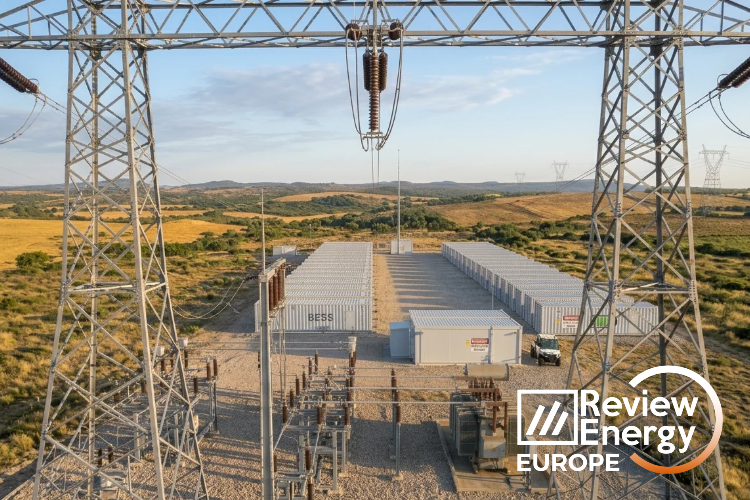


Portugal opens 1,050 MVA of grid capacity for renewables and storage, including 750 MVA for standalone batteries
The Portuguese government has launched two electronic auctions offering a combined 1,050 MVA of grid connection capacity for renewable electricity generation and energy storage projects, marking the country's first competitive procedures of this kind since 2021.
Announced by the Ministry of Environment and Energy, the tenders include 300 MVA for renewable power plants with co-located storage and 750 MVA for standalone electricity storage facilities, primarily targeting the development of new battery projects and renewable generation capacity.
The auctions follow the publication of the corresponding orders in Portugal's Official Gazette on October 22 and will be managed by the Directorate-General for Energy and Geology (DGEG).
The government expects the initiative to encourage investment in electricity storage, improve the integration of renewable generation and increase the flexibility of the national electricity system.
Standalone batteries account for 750 MVA of the available capacity
The largest share of the tendered connection capacity is reserved for standalone electricity storage systems, which will receive up to 750 MVA across designated grid connection locations.
According to the DGEG, projects participating in this auction must have installed nominal power equivalent to at least 100% of their allocated grid injection and charging capacity.
They must also provide a minimum storage duration of four hours at maximum injection power, establishing technical requirements for the battery installations seeking connection rights.
The separate tender for renewable energy projects with co-located storage offers up to 300 MVA of grid connection capacity.
Under this procedure, eligible renewable generation facilities must incorporate storage systems with installed power equivalent to at least 20% of their allocated injection capacity, together with sufficient storage capacity to operate for at least four hours at maximum injection power.
Both auctions will be conducted electronically and include qualification, bidding and capacity allocation stages. The procedures also provide for competitive bidding over available connection locations.
The auctions allocate grid connection rights rather than directly purchasing electricity or guaranteeing the construction of the full capacity offered.
Energy storage expected to reduce reliance on natural gas
The Portuguese government considers electricity storage essential to managing the growing contribution of renewable energy to the national electricity system.
Battery installations can store electricity during periods of high renewable generation and lower wholesale prices, releasing it when consumption increases or renewable output declines.
According to the Ministry of Environment and Energy, additional storage capacity could help moderate electricity prices during peak demand periods and reduce the need for natural gas-fired generation.
The government also expects these installations to improve system flexibility, efficiency and security of supply.
The initiative is aligned with Portugal's proposed National Energy Storage Strategy, recently submitted for public consultation, which sets out an ambition to reach 3 GW of battery storage capacity by 2030.
Portugal has also published technical connection requirements for electricity storage installations, including capabilities related to frequency and voltage stabilisation, with the aim of strengthening grid security and resilience.
Municipalities to receive up to 70% of auction revenues
One of the distinctive features of the new auction framework is the allocation of part of the revenues to municipalities hosting the projects.
Under the announced arrangements, municipalities will receive 70% of the revenues generated by the auction for renewable projects with co-located storage and 30% of the revenues from the standalone storage auction.
Local authorities will also be entitled to annual compensation payments from project developers operating installations in their territories.
The government says the measures are intended to increase the economic benefits for communities hosting renewable energy and storage infrastructure and encourage local participation in the energy transition.
The framework also gives particular attention to agrivoltaic projects, which combine solar electricity generation with agricultural activity on the same land.
According to the DGEG, the auction for renewable projects with co-located storage includes a specific bidding incentive for proposals that preserve agricultural activity alongside renewable electricity generation.
The government argues that these arrangements can help protect productive land, diversify farmers' income and expand the economic and social benefits of renewable energy projects.
Portugal seeks to accelerate renewable investment and grid flexibility
Portugal's Minister of Environment and Energy, Maria da Graça Carvalho, welcomed the launch of the auctions, describing them as an important step towards expanding electricity storage and supporting a transition that combines more affordable electricity with greater benefits for communities and land use.
The new procedures come as Portugal seeks to increase renewable electricity generation while strengthening its ability to balance variable solar and wind output.
By allocating connection capacity specifically to storage facilities and renewable projects with batteries, the government aims to support a more flexible electricity system capable of managing higher renewable penetration.
The auctions also represent a new opportunity for developers seeking access to grid capacity, although the projects will remain subject to the technical, licensing and contractual requirements established under the applicable procedures.
The allocation of 1,050 MVA marks a further step in Portugal's efforts to expand energy storage infrastructure, support renewable electricity integration and reduce dependence on imported fossil fuels as the country works towards its 2030 energy objectives.


Comentarios
Sé el primero en comentar...