


U.S. hits 5.6 GW record in energy storage in Q2
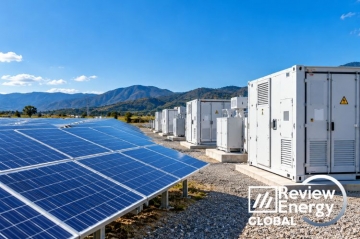
The U.S. energy storage market set a new quarterly record in the second quarter of 2025, installing 5.6 GW of capacity, according to the latest US Energy Storage Monitor report published by the American Clean Power Association (ACP) and Wood Mackenzie. Large-scale projects led the expansion, with 4.9 GW added, enough to meet peak electricity demand for 3.7 million U.S. homes.
While early adopters continue to drive deployment, activity across the country shows growing demand for utility-scale storage as a solution to rising electricity costs and increasing energy needs.
Texas, California, and Arizona each added over 1 GW of capacity, while markets such as the Southwest Power Pool (SPP) saw renewed activity, with three projects coming online in Oklahoma, the first in the region in three years. Florida and Georgia also posted strong growth due to aggressive acquisitions by vertically integrated utilities.
Noah Roberts, Vice President of Energy Storage at ACP, emphasized the sector’s rapid expansion. "Energy storage is being deployed quickly to strengthen our grid in response to surging electricity demand and is helping to reduce energy costs for U.S. families and businesses. Despite regulatory uncertainty, storage drivers remain strong, and the industry is on track to produce enough grid-scale batteries domestically to meet 100% of national demand. Energy storage will be essential for the expansion of the U.S. grid and the country’s energy production”, he said.
Residential and C&I segments continue growing
Residential storage grew by 608 MW in Q2, representing a 132% year-over-year increase and an 8% rise from the previous quarter. California, Arizona, and Illinois led the growth, benefiting from higher interconnection rates and the increasing adoption of larger systems.
The community, commercial, and industrial (C&I) segment expanded more modestly, adding 38 MW, up 11% year-over-year. California and New York accounted for over 70% of C&I installations, while Illinois is gaining traction. Community storage remains limited due to high costs and policy constraints.
Resilience amid regulatory uncertainty
Wood Mackenzie forecasts that U.S. energy storage could reach 87.8 GW by 2029, driven primarily by residential and utility segments, despite ongoing policy changes. Utility-scale installations may decline 10% year-over-year in 2027, largely due to uncertainty over the Foreign Entity of Concern (FEOC) regulations affecting battery cell supply.
Allison Feeney, a research analyst at Wood Mackenzie, noted that uncertainty over pricing, FEOC regulations, and slow community storage development may keep the C&I segment below 1 GW by 2029, although initiatives like Massachusetts SMART 3.0 could boost future adoption. Residential storage is expected to outpace solar installations, supported by strong uptake in key markets like California and Puerto Rico and continued access to the investment tax credit (ITC) through third-party ownership.
Allison Weis, Global Director of Storage at Wood Mackenzie, added that while the One Big Beautiful Bill (OBBBA) preserved the ITC for energy storage, challenges remain. The five-year construction window could reduce eligible capacity by 16.5 GW. Projects starting after 2025 must meet stricter battery sourcing requirements to qualify for the ITC. While domestic cell supply is increasing, potential shortages could occur, with developers still relying on Chinese supply to fill gaps.
The urgency to commence construction under the current regulatory framework is improving short-term forecasts. Projects that fail to meet certain milestones by the end of 2025 risk being exposed to regulatory changes. Delays in permitting could pose an additional threat to solar and storage projects nationwide.



Comentarios
Sé el primero en comentar...