
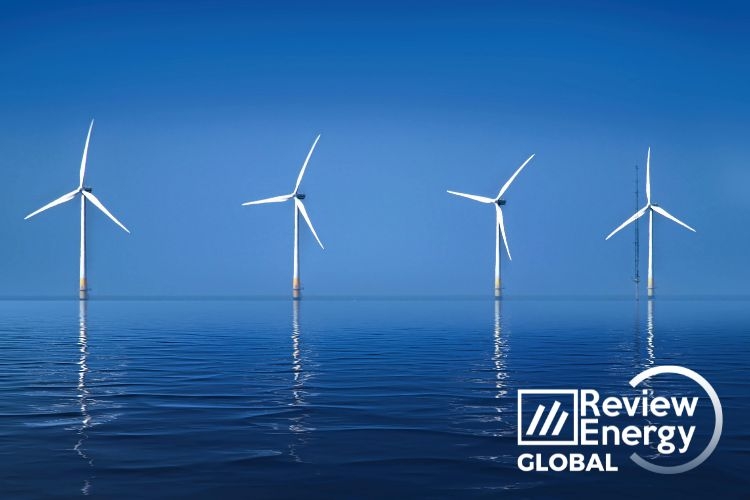


Offshore wind emerges as an option to diversify energy supplies across small island states
Offshore wind could play an increasingly important role in strengthening energy security across Small Island Developing States (SIDS), particularly where limited land availability constrains the expansion of renewable generation. A new report by the Global Offshore Wind Alliance (GOWA) and the International Renewable Energy Agency (IRENA), launched at Pre-COP31 in Fiji, examines the potential role of offshore wind across the group of 39 island and coastal developing countries in the Pacific, Caribbean, Atlantic and Indian Ocean regions.
SIDS are home to more than 65 million people and account for more than 16% of the world’s exclusive economic zones, while contributing less than 1% of global greenhouse gas emissions. According to the report, fossil fuels account for around three-quarters of their energy mix, while reliance on imported fossil fuels for electricity generation reaches as high as 90% in some countries. These conditions contribute to some of the highest electricity prices in the world.
The vulnerability of these energy systems was highlighted in 2026, when several Pacific island states experienced blackouts linked to fuel shortages following the Strait of Hormuz crisis and a cyclone. Tuvalu and the Marshall Islands declared emergencies during the disruptions, according to the report.
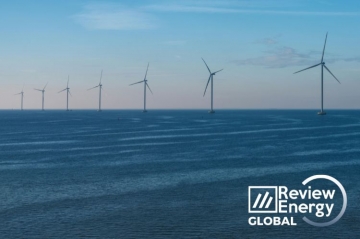
Against this backdrop, GOWA and IRENA identify offshore wind as a potential option for diversifying electricity generation and reducing dependence on imported fossil fuels. Unlike land-based renewable projects, offshore wind can access wind resources without placing additional pressure on scarce land, while offering the potential for larger-scale generation alongside solar PV and other distributed technologies.
Significant technical potential
Renewable capacity across SIDS increased from 3.4 GW in 2014 to 11.2 GW in 2025, representing growth of around 230%. Solar PV accounts for most of this expansion, while onshore wind has played a smaller role. The report argues that offshore wind could complement this growth in countries where land availability, population density or competing land uses limit further deployment.
The technical potential identified by the report is significant in several SIDS. Fiji has an estimated 186 GW of offshore wind technical potential, including 27 GW from fixed-bottom projects and 159 GW from floating technologies. Tonga has 127 GW, Vanuatu 93 GW and the Dominican Republic 65 GW.
However, the report stresses that technical potential should not be interpreted as economically or practically feasible capacity. The suitability of offshore wind varies between countries and depends on factors including wind resources, electricity demand, grid capacity, project economics, environmental and social considerations, and access to affordable finance.
Globally, offshore wind capacity surpassed 90 GW in 2025. The report notes that floating foundations could be particularly relevant for SIDS, as around 70% of their offshore wind potential is located in waters considered suitable for floating structures. However, floating offshore wind remains at an earlier stage of commercialisation and costs need to decline further for wider deployment.
Costs and infrastructure remain key barriers
The economics of offshore wind have improved significantly. The global weighted-average levelised cost of electricity (LCOE) for fixed-bottom offshore wind stood at $78/MWh in 2025, 63% below its 2010 level, according to the report. At the same time, costs can vary considerably between regions, with deeper waters and more challenging conditions increasing project costs.
For SIDS, the challenges extend beyond generation costs. The report highlights the need for stronger electricity grids and port and marine infrastructure, clearer permitting frameworks, marine spatial planning and access to financing.
The authors also point to the importance of considering biodiversity and other environmental and social impacts from the outset. Concessional finance, grants and mechanisms to reduce investment risks could help countries with limited fiscal capacity develop projects and attract private capital.
Regional cooperation could support deployment
The report points to growing political and institutional momentum around offshore and other ocean-based renewable energy in several regions. In the Pacific, the Regional Energy and Transport Ministers’ Meeting in May 2026 recognised the potential of ocean-based renewables and launched the Pacific Regional Ocean Energy Roadmap and Investment Pipeline (PROERP).
Other SIDS are also beginning to explore offshore wind. Papua New Guinea, Saint Lucia and Trinidad and Tobago have joined GOWA, while preliminary offshore wind studies in Dominica have received support from the World Bank.
The report argues that regional cooperation could help SIDS overcome some of the constraints associated with developing offshore wind markets independently. Pooling resources, coordinating project delivery and strengthening regional supply chains could reduce costs and improve access to technical expertise.
GOWA and IRENA ultimately stress that offshore wind will not be suitable for every SIDS. Its role will depend on each country's resources, electricity system, infrastructure, financing conditions and environmental and social context.
The report recommends that SIDS integrate offshore renewable energy into national energy and grid planning, develop marine spatial plans, strengthen permitting and technical standards, improve access to finance and deepen regional and international cooperation.
For island states seeking to reduce their exposure to imported fossil fuels, offshore wind could therefore become part of a broader strategy to diversify electricity generation and strengthen long-term energy security, particularly where the availability of land limits the expansion of renewable capacity.

Comentarios
Sé el primero en comentar...