
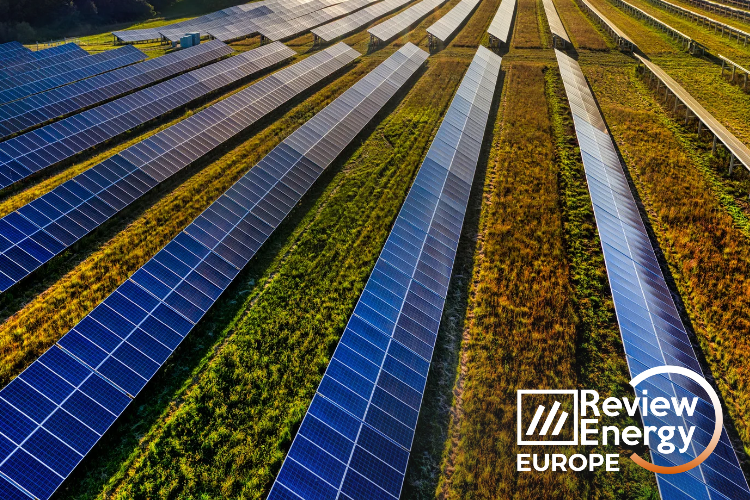


UK greenlights 800 MW solar project expected to power 400,000 homes
The UK's Department for Energy Security and Net Zero (DESNZ) has granted development consent for Great North Road Solar and Biodiversity Park, a solar photovoltaic project with a maximum generation capacity of 800 MW, incorporating battery energy storage and infrastructure to connect to the national electricity grid.
The decision, announced by the Planning Inspectorate, marks a major regulatory milestone for one of England's large-scale solar developments, promoted by Elements Green Trent Limited.
The project will be located northwest of Newark-on-Trent, in Nottinghamshire, and will connect to the national grid through the Staythorpe substation.
According to the developer's estimates, the facility could generate approximately 1.13 TWh of electricity annually, equivalent to the yearly electricity consumption of around 400,000 UK homes.
An 800 MW solar facility with battery storage
The project includes solar photovoltaic panels, a battery energy storage system (BESS), and the infrastructure required to transmit electricity to the grid.
Technical documentation indicates approximately 1,120 MW of photovoltaic capacity in direct current (DC), corresponding to 800 MW of generation capacity in alternating current (AC).
The storage system will enable part of the electricity generated to be stored and supplied at other times, improving operational flexibility and supporting the integration of renewable generation into the electricity system.
Development consent includes the BESS installation, although the official announcement does not specify its final power rating or energy storage capacity.
The development will cover approximately 1,765 hectares, of which around 1,025 hectares will be allocated to solar infrastructure. The remaining land will accommodate supporting infrastructure, access routes, grid connections and environmental measures.
Project includes 64,500 trees and new biodiversity areas
Alongside electricity generation, Great North Road incorporates environmental restoration and biodiversity enhancement measures.
Elements Green plans to plant approximately 64,500 trees and establish more than 50 kilometres of new hedgerows, alongside areas dedicated to protecting and restoring natural habitats.
The proposal also includes more than 800 acres of biodiversity areas outside the land occupied by solar panels.
In addition, it provides for 28 new public access routes, including walking paths and bridleways, with a combined length of approximately 34.8 kilometres.
These initiatives form part of the developer's proposed environmental measures and will be subject to the applicable requirements during construction and operation.
Development consent granted following planning examination
Elements Green submitted its application for development consent on June 27, 2025, and the Planning Inspectorate accepted it for examination on July 22 of the same year.
The project was assessed under the Nationally Significant Infrastructure Projects (NSIP) regime, which applies to certain large-scale energy developments in the United Kingdom.
During the examination, local authorities, statutory bodies and affected communities had the opportunity to submit representations and supporting evidence.
Following the assessment, the Examining Authority submitted its recommendations to the UK government on July 28, 2026.
Development consent was granted on October 27 through a decision made by Baroness Curran, acting under delegated authority from the Secretary of State for Energy Security and Net Zero.
According to the developer, construction could begin from 2027, although the timetable remains indicative and may change as the project progresses through its next stages.
With this approval, Great North Road has cleared a major regulatory milestone. However, development consent does not mean construction has started or that the 800 MW of solar generation capacity has already been added to the UK's electricity system.

Comentarios
Sé el primero en comentar...